Julia and the Bazooka
Julia and the Bazooka
Anna Kavan 1901-1968
Anna Kavan  is the author of Ice, a surreal sci-fi masterpiece about a woman and two barely distinguishable sadistic men, one who has enslaved her, and one who wishes to. The world is slowly turning to ice. She has the incredibly smooth and detached voice of mid-century English fiction, flawlessly written and absolutely clear, like Somerset Maugham or Graham Greene. The subject is always herself. This is what links her early realist work to her later surreal stuff. Anna Kavan (it is a nom de plume, taken from the protagonist of an early novel) was a lifelong heroin addict. She was suicidal. She called her syringe her bazooka. Hence the title of her last collection of short stories, Julia and the Bazooka. This is from the first story:
Â
The Old Address
“Why am I locked in this nightmare of violence, isolation and cruelty? Since the universe only exists in my mind, I must have created the place, loathsome, foul as it is. I live alone in my mind, and alone I’m being crushed to suffocation, immured by the walls I have made. It’s unbearable. I can’t possibly live in this terrible, hideous, revolting creation of mine.â€
The stories catalogue a solipsism so extreme it is hard to endure. In one story (Fog) a woman driving a car through the fog runs over and kills a hippie on the road, but decides she couldn’t possibly have done anything because the world isn’t real. She doesn’t understand why she has been arrested. She misses her bazooka. It is the fog that is alive. Nothing else in the story is real. In the police station she reflects: “I suddenly wanted to escape then, before it was too late. I knew I must take immediate action to extricate myself from the situation. But I couldn’t do this as long as things seemed unreal and I wasn’t really here, so first I had to stop feeling absent and disconnected. All of the sudden, I urgently wanted to wake up, not just sit here in my sleep, but be really here, instead of nowhere….â€
“Then I looked around, and instantaneously stopped wanting to wake up. The last thing I wanted was to be awake here, when I saw the inspector still standing horribly close, no longer a lifeless dummy, a commonplace cardboard mask, but a sinister human being with frightening powers over me, whose green watching eyes had turned cold, ruthless, piercing, in a hard face now ominously alive and real, accusatory, unmistakably menacing.
“All I wanted then was for everything to go on as before, so that I could stay deeply asleep, and be no more than a hole in space, not here or anywhere at all, for as long as possible, preferably forever.â€
I don’t think you need Freud to see a death wish here. It is also the impulse of addiction. The addict is fleeing the pain of existence, and it is better never to have existed at all.
I am reading Young Men and Fire, Norman Maclean’s book about the 1949 Mann Gulch forest fire that killed 12 young men. In it he describes a blow up, when a forest fire burning slowly at high heat suddenly blooms into a six-hundred foot, 2,000 degree Fahrenheit monster. The phenomenon of a blow up was known at the time but had not been described because, as Maclean says, no one who ever was in one survived to tell about it. Kavan’s work is like this in the sense that it describes with great objectivity what it is like to inhabit a consciousness that few are ever able to describe because most who inhabit it are inarticulate or dead.
Â
Â
Jeremy Reed, in A Stranger on Earth, a literary biography of Kavan (and to which this entire post is indebted), goes to some length to divorce her art from heroin addiction. He takes her mastery of craft and steady output as evidence that heroin was a way of managing mental illness and that it allowed her artistic imagination to run free. The bizarre and painful visions and the hallucinations of her art are not the products of drug experience at all. They are genuine visions she would not otherwise have been able to articulate because of anxiety and madness. This is possibly true, but the isolation, narcissism and solipsism everywhere in evidence in her writing, as well as the sado-masochism, are all recognizable traits of addicts, especially her willingness to lie. In the story Fog, in Julia and the Bazooka, a woman driving through a dense, poisonous fog encounters a group of hippies.
From Fog:
“I just looked indifferently at their silly faces surrounded by all that idiotic hair in wet snake-like strands, every grinning face wet and glistening with fog, every mouth opening and shutting, with breath streaming out of it in clouds. They reminded me of Japanese dragon-masks and also of the subhuman nightmare mask-faces in some of Ensor’s paintings. These faces grimacing at me through the fog had the same sort of slightly eerie repulsiveness of masks, of walking and talking things, not really alive. They’d have repelled me if they’d been human beings. But as they were only dummies I felt nothing about them, my indifference was unaffected….â€
Â
Disoriented, she runs one over and drives away. When she is picked up shortly later by the police she denies ever having done so. She indignantly insists, to herself and her interrogator, that it could not possibly have happened. There is no connection at all to her actions or her victim, just the conviction that nothing happening to her is real, and, finally, that the Police inspector is demonic, Nazi-like persecutor. All drugs have their myths. Fog pretty perfectly presents us the self-mythology of a junky.
Â
Kavan was born Helen Woods in 1901. Her parents showed little interest in raising her and she attended a series of boarding schools until she was seventeen. She was shy, intellectually gifted and led a totally sheltered existence, without family love. The only intimacy is an implied affair with a girl at boarding school. Her father committed suicide. Her mother, a socialite who liked to sleep around, married her off at age 17 to a boorish alcoholic she didn’t know, Donald Ferguson, ending Anna’s plans to attend Oxford, where she had been admitted. Ferguson took her to Burma where they had a son whom Anna shunned, unable to separate him from his father. (This son died in WW2). Ferguson seems to be more subhuman than Soames Forsyte, and like Soames he raped his wife. She finally left him and returned with her son to Europe, putting him into boarding school. She started to write novels under the name Helen Ferguson, which she continued to do until the late 30’s, despite detesting the man. For the rest of her life she would return to the horror of this first marriage.
Â
From Experimental:
Â
“Then I left things to him, and he gripped me hard but with expertise. It was better than I expected. For a second I almost managed to feel involved. Then the situation slipped away from me and once more became unreal, I was once more left outside it. He was panting and heaving, making muffled noises a bit like a seal I’d heard barking once in a cave on the shore….â€
Â
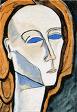
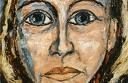
She next took up with a married man, Stuart Edmonds, bohemian dilettante and wannabe painter, whom she loved obsessively. When he finally divorced his wife they lived together and travelled widely, though as with Ferguson she ceased having sex with him. Unlike Ferguson, who was enraged by her refusal, Edmonds resumed his affairs with other women. Anna was a fairly successful novelist, a proto-feminist writing in a popular and familiar mode about bad marriages and bohemian London. Edmonds was also an alcoholic and according to Reed their addictions (his to booze, hers to heroin) were incompatible and a source of conflict. In 1938 a suicide attempt landed her in a Swiss insane asylum, her second marriage effectively over. Here the story could have ended. Instead, when she emerged, she emerged a different woman. She renounced sex, dyed her hair blonde and started writing as Anna Kavan, beginning with Asylum Piece, a book of short stories about her confinement. Henceforth she would travel with homosexual companions and live the life of an addict and artist. She was an interior designer and bought dilapidated properties which she renovated and sold. And she wrote books that were quite different than anything she had done before. This gentlewoman junky made herself into that rare instance of an English artist with a wholly continental orientation. And her artwork! That face with the blue slits for eyes…the gaze of an alien cloud.
From Ice:
“She tore herself free, dashed to the door, threw her whole weight against it. It crashed open so violently that she lost her balance and fell. The bright hair spread on the floor, quicksilver, brilliant, stirring, alive, on the dark, dull, dead, dirty floor. I picked her up. She struggled, gasped: ‘Let me go! I hate you, I hate you!’ She had no strength at all. It was like holding a struggling kitten. I shut the door and turned the key in the lock.â€
Â
The conviction that the world is unreal, a nightmare or hell created by an imprisoned consciousness, a real self, is opposite to what I often feel, which is that the material world is far too real while I am a shadow passing through it. Either way, sanity depends upon a redemptive act of gnosis. This is wholly absent from what I have read of  Kavan’s work. What makes it so compelling, and ultimately perverse, is that she is totally unreconciled to the ordinary, defining aspects of life, birth, sex, relationship, death. Kavan’s characters are terrified of the air, of weather, food, touch. In Ice there is no love, only pursuit and domination. It is a world of anger, silence and rape.
From Ice:
“For a second she stood still, appalled by the absolute silence and loneliness all around. A new ferocity pervaded the landscape now that night was approaching. She saw the massed army of trees encamped on all sides, the mountain wall above bristling with trees like guns. Below, the fjord was an impossible icy volcano erupting a baleful fire of the swallowed sun.
From Ice:
“The day got colder as it went on, the sky darkened. Rising beyond the mountains behind me, ominous masses of black clouds were converging upon the sea. I watched these clouds, understood their meaning; felt the intensifying cold with increasing dread. I knew it meant only one thing: the glaciers were closing in. Instead of my world, there would soon be only ice, snow, stillness, death; no more violence, no war, no victims; nothing but frozen silence, absence of life. The ultimate achievement of mankind would be, not just self-destruction, but the destruction of all life; the transformation of the living world into a dead planetâ€
Â
I wonder if Ice should be considered sci fi at all. It creates a vivid alternate world, and it is apocalyptic, but that world is really a representation of a mind, a situation, and since that mind and situation are not in the future, not anywhere at all, it is at least a question I have. Generally, the idea that sci fi fans get to define what is and isn’t sci fi is repugnant to me. I write sci fi but I don’t as a rule read it, not as a genre anyway. I read good books, or books I judge to be good. Is The Man Who Fell To Earth sci fi? Certainly. Ice was written at a time when sci fi writer’s like JG Ballard were imagining various apocalyptic scenarios, like Burning World, or Drowned World. Compare Ice to a book also about the world freezing over, Cat’s Cradle. Cat’s Cradle, despite its fable-like qualities, is about real people in a real world that is the future. Ice on the other hand is hermetically sealed off in a single mind, and that is the mind of the author, not even the narrator. It is a dream, not about a dream, but it is a literary dream, a vision of writing. In the dream the world is turning to ice, it is freezing to death. The ice is invading and the descriptions of ice and snow are haunting and beautiful. This is from a tropical island they have reached: “An ice-cold airstream hit me outside. Dusk was falling, the wind brought crumblings of frozen snow…Frost had killed off the exotic plants…the leaves of palm trees were shriveled, moribund, blackened, furled tight like rolled umbrellas.†Authority has collapsed. A man pursues a heroine who may or may not be real, through a world that may or may not be real. “Reality had always been something of an unknown quantity to me.†The narrative voice is that of the disembodied inspector or bureaucrat. I am reminded of the Ballard narrator in a story where a giant washes up on a beach. Never is it addressed that there are no giants. Instead we are given a sober report on the event, the condition of the body, the crowd that comes to view it.
Â
Gravity’s Rainbow is a book that takes place in a true historical moment, World War 2, but it employs the methods of grotesque satire and narrative deformation to deny all linearity and sense. It takes place wholly in a literary universe and is engaged both with the actual history of World War 2 and with the actual history of the novel. There is not a single containing mind, there is rather Pynchon’s phantasm of language and event. It is then engaged in a way that Ice is not. Ice is not addressed to a real event or a real world, nor is it engaged with the novel as a form of narrative in need of disruption.
Â
Kavan is most often compared to Kafka. The prison of events is similar, but with Kafka I have the sense of a narrator constructing an absurd and helpless metaphysical puzzle which is allegorical in nature. It is open to interpretation. We see the machinery of the world and the universe and ultimately the impossibility of escaping a universe of inscrutable meaning. Kavan is no mystic. She goes to surrealism for the reportage of a personal nightmare that does not admit of interpretation. Kavan is an absolutist.
Â
From Fog:
“All I wanted then was for everything to go on as before, so that I could stay deeply asleep, and be no more than a hole in space, not here or anywhere at all, for as long as possible, preferably forever.â€
Â
Kavan is a photo-realist of the phantasm of the self, the horror of life, helpless to change itself other than to become a work of art, precise, relentless and objectifying. The alternative is extirpation.
Â
“A terrible cold world of ice and death had replaced the living world we had always known. Outside there was only the deadly cold, the frozen vacuum of an ice age, life reduced to mineral crystals; but here, in our lighted room, we were safe and warm. I looked into her face, it was smiling, untroubled; I could see no fear, no sadness there now. She smiled and pressed close, content with me in our home.â€
Â
The home is a car and they have only minutes to live.
Â